Medical Device Records
Design history, master record, lot record and risk file, built from the records your teams already keep.
Learn more
Medical Devices and Healthcare
Design controls, device records, risk, UDI and vigilance on the same system that buys the components, makes and sterilises the lot, ships it to the hospital and keeps the books.
Who it is for
Makers of sterile, single-use and implantable devices, surgical instruments and disposables.
Life science and healthcare product companies that must show a design history and a record for every lot.
Growing manufacturers whose quality records sit in folders and spreadsheets beside a separate accounts system.
Sound familiar?
The design history file is assembled by hand in the weeks before an audit.
Nobody can quickly show which master record a lot was made to.
A lot is released from a spreadsheet and a folder of signatures.
The risk file, the requirements and the test reports live in different places.
A complaint waits in email while the reporting clock runs.
The quality system and the books never agree on what was made and shipped.
How it works
Requirements, test plans and runs, design reviews, change orders and CAD. The design history file gathers them against the device.
Hazards scored before and after each control, with the control traced to a requirement and to the test that verifies it.
Bill of materials, routing, inspection plans, labelling and sterilisation specification, approved and signed as a version.
Approved vendors, goods receipt and inspection, production by lot, then sterilisation loads with biological indicator and residual results.
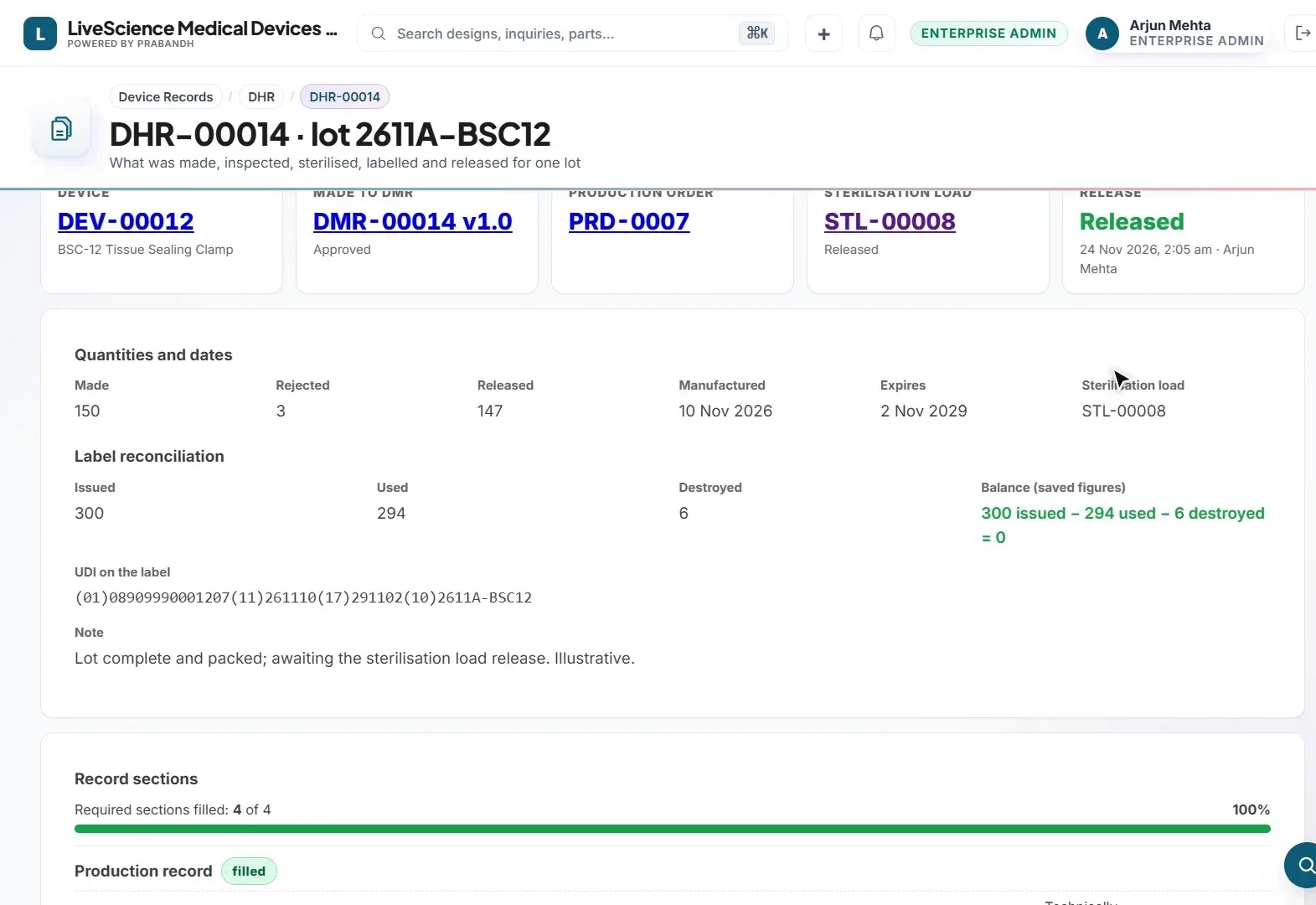
The device history record is released only when quantities, labels, sterilisation, UDI and deviations are all in order.
Hospital and export sales on the same books; complaints assessed for reportability with a due date; recall by lot.
What is specific to medical device
Indexes over records that already exist, with the revision seen when each was linked and its status today.
A five-by-five matrix, residual risk and a benefit-risk statement, signed only when no unacceptable risk or unverified control remains.
GTIN-14 check digit, your GS1 prefix, package levels, label strings per lot and GUDID and EUDAMED status.
IQ, OQ, PQ and process validations with expiry, and loads released against the residual limits of the device.
Reporting due dates for FDA MDR, EU MIR and CDSCO, and filings tracked by market with their expiry.
Password asked again, meaning recorded, content fingerprinted, with a lock after five wrong passwords.
Each clause beside the screen that holds its evidence.
Purchasing, stock by lot, production, sales, GST accounts, payroll and people.
Watch
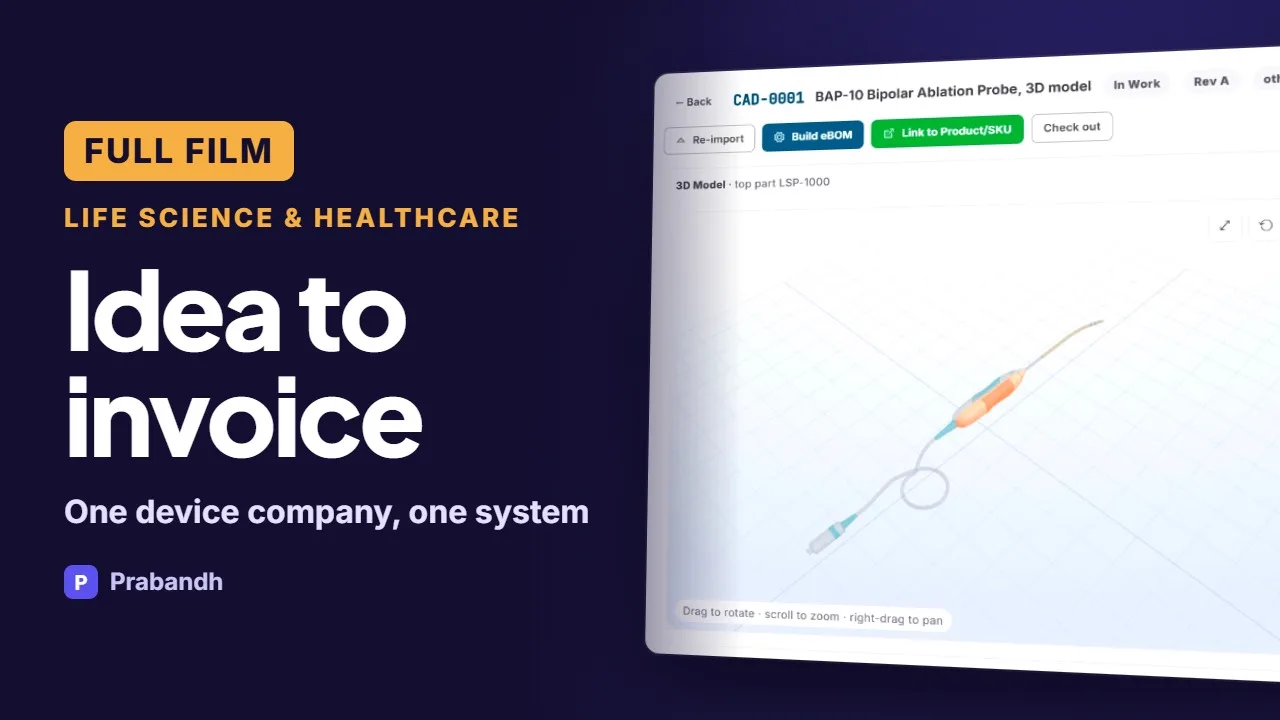
Fifteen short films and one full film follow a fictional device maker, on demonstration data, from the first design input to the final invoice.
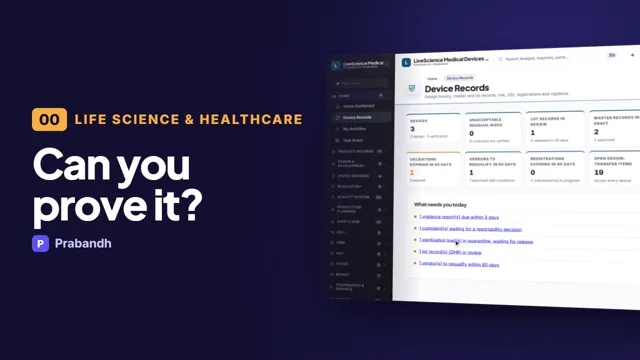
The company, its devices and the question an auditor asks. 3:07
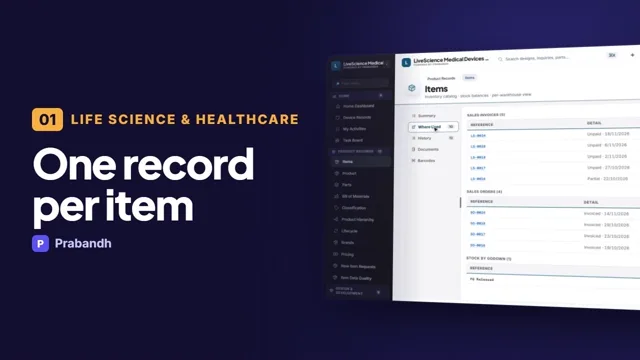
Items, parts, bills of materials and the product record of a device. 5:30
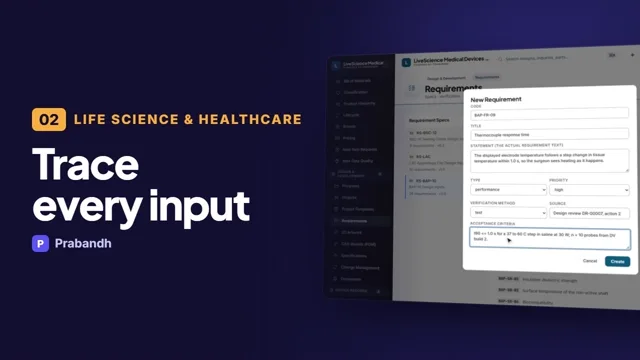
Requirements traced to the tests that verify them. 5:38
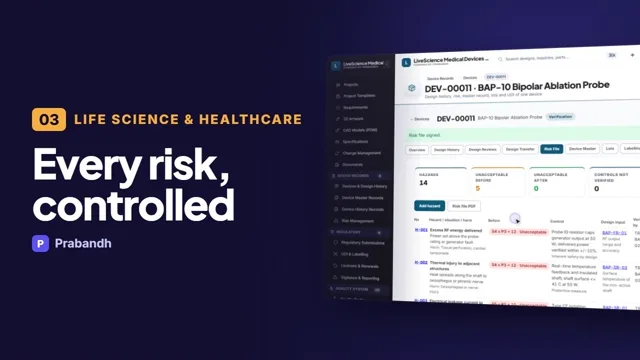
Hazards, controls, residual risk and the signed risk file. 5:23
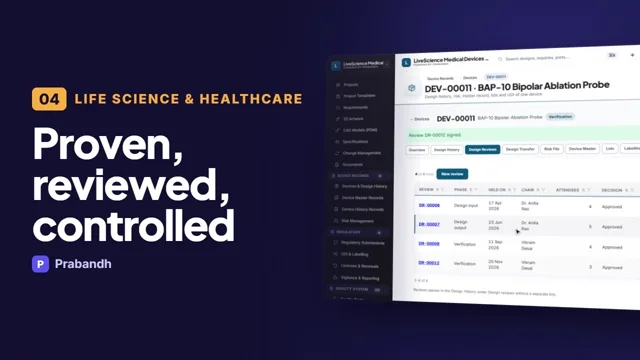
Design outputs, verification, design review and change orders. 5:32
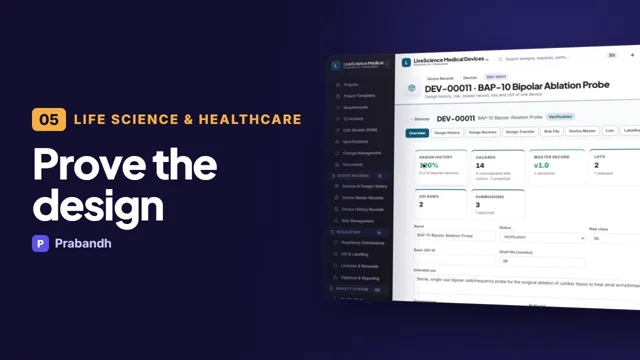
The DHF, the device master record, UDI labelling and the technical file. 6:34
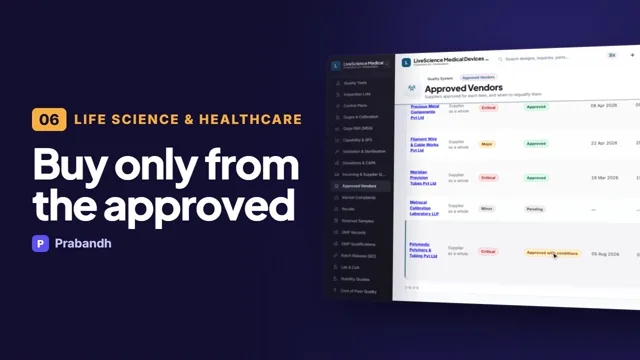
Approved vendors, purchase orders, goods receipt and payment. 5:51
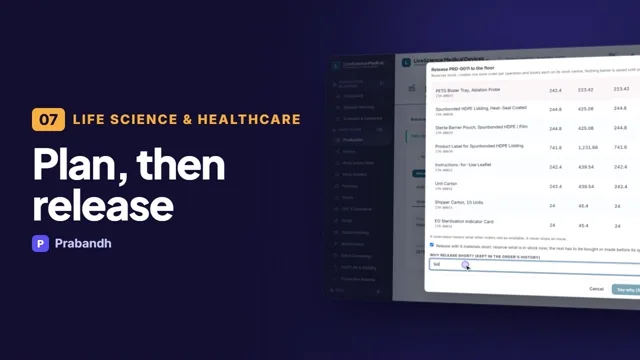
Material planning, production orders and release to the shop floor. 6:19
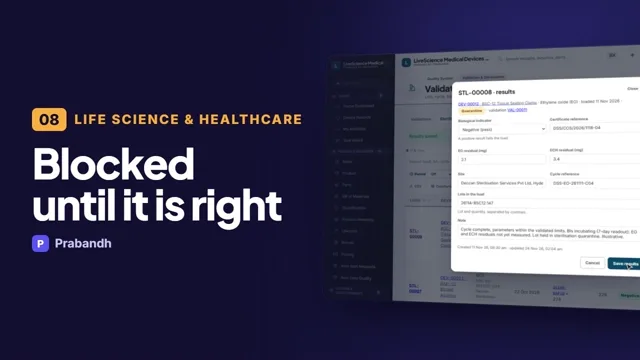
Production, deviations, validations, sterilisation and lot release. 5:51
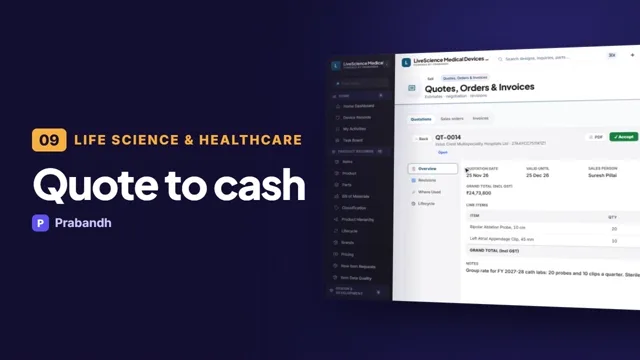
Quotation, order, GST invoice and receipt for a hospital customer. 6:14
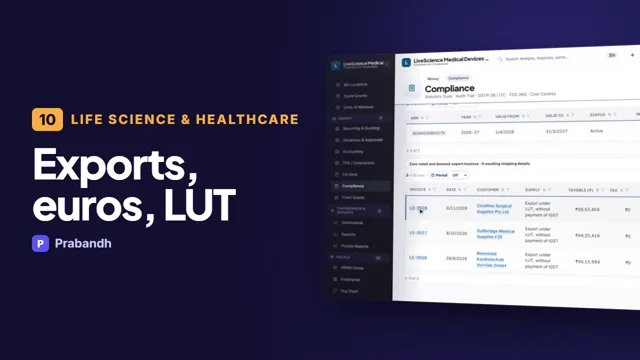
Export invoicing under LUT, shipping bills and foreign currency. 6:11
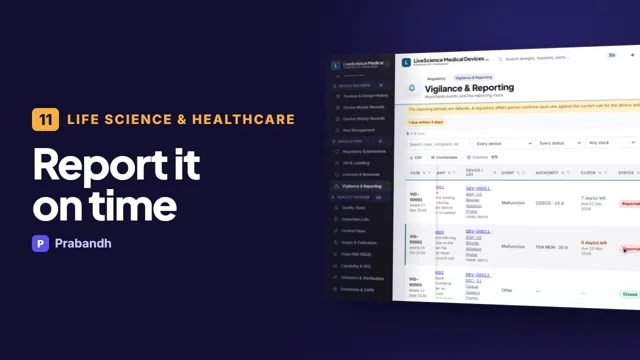
A complaint, its investigation and the reportability decision. 5:34
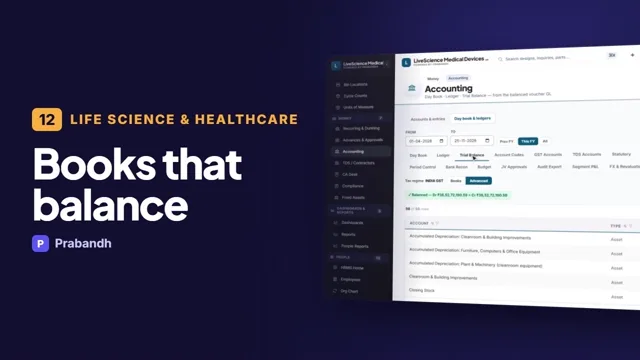
Vouchers, bank matching and financial statements from the same records. 6:18

Dashboards for the owner, finance and the plant. 5:32
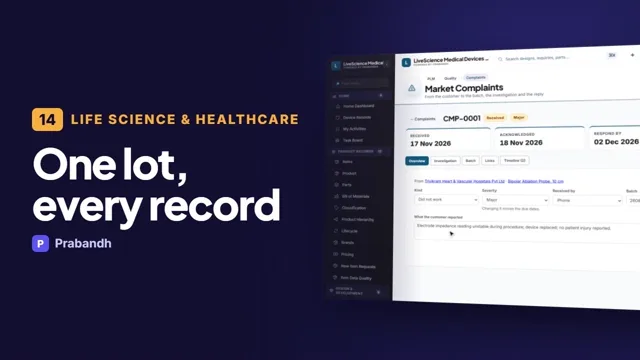
One lot followed from its components to the customer. 5:47
Playing a film loads it from YouTube. Open the whole playlist on YouTube.
Prabandh makes no claim that any authority or notified body has accepted or certified it. Electronic filing with GUDID, EUDAMED or any authority, a 21 CFR Part 11 assessment, computer system validation documents, serialisation track-and-trace, cold-chain monitoring and hospital or patient records are not included.
Design history, master record, lot record and risk file, built from the records your teams already keep.
Learn moreOne engineering bill of materials, controlled change and the CAD that belongs to it.
Learn moreControlled documents with owners, approvals, reviews and a retention policy.
Learn moreCatch it at receipt, on the line and before dispatch, and prove it to the auditor.
Learn moreFrom enquiry to paid bill, with the supplier compared and the receipt matched.
Learn moreKnow what you have, where it sits and how old it is, down to the bin.
Learn morePlan it, issue it, make it and cost it, with the bill of materials the design team released.
Learn moreBooks that close themselves from the work your team already did.
Learn moreAlso see: Medical Devices and Healthcare · Medical Device Records module · Pharma and Life Sciences · Packages
It runs a device maker's business and its quality records together: design controls, device master and history records, risk, UDI, purchasing, lot-traced production, sales and accounts. Prabandh keeps them on one record, so the design history file and the lot record point to the same documents, bills of materials and production orders the teams work from.
The design history file is the evidence of how a device was designed. The device master record is the approved specification for making it. The device history record shows how one lot was made, inspected, sterilised, labelled and released. In Prabandh each is an index over the live records, with its own completeness check and signature.
No such claim is made. Certification belongs to your quality system, not to a software product. Prabandh gives you records, signatures, an audit trail and a clause map. Validating the software for your intended use, and any assessment against 21 CFR Part 11, is your quality team's work.
No. It holds the device identifiers, builds the label strings and records the status of each database entry. You make the filing and record the reference.
Yes. Each device has its sterilisation specification with residual limits, each load records the biological indicator and residuals, and a lot record cannot be released until its load is released.
No. It is for companies that make life science and healthcare products. It does not hold patient, appointment or clinical records.
Send an inquiry or request a demo. A specialist replies within one working day. Pricing is given by inquiry because it depends on users, modules and the data you bring across.