Sustainability
Footprint, supplier risk, substance limits, claims and packaging, beside the decisions that set them.
Learn more
See the footprint beside the cost when the material is chosen, know which suppliers need action, check styles against the limits of their markets, and keep the evidence behind every environmental claim.
Who it is for
Apparel and fashion brands that design in India and make with their own or contract factories.
Exporters whose buyers ask for material, factory and restricted-substance evidence.
Brands that print environmental claims or place plastic packaging on the market and need to show their figures.
Sound familiar?
The footprint is worked out once a year, long after the buying decision.
Audit reports and certificates expire in a shared folder.
Nobody can say which styles were tested against the limits of the market they ship to.
A claim on a hang tag has no file behind it.
Packaging weight by plastic category is rebuilt from invoices every year.
How it works
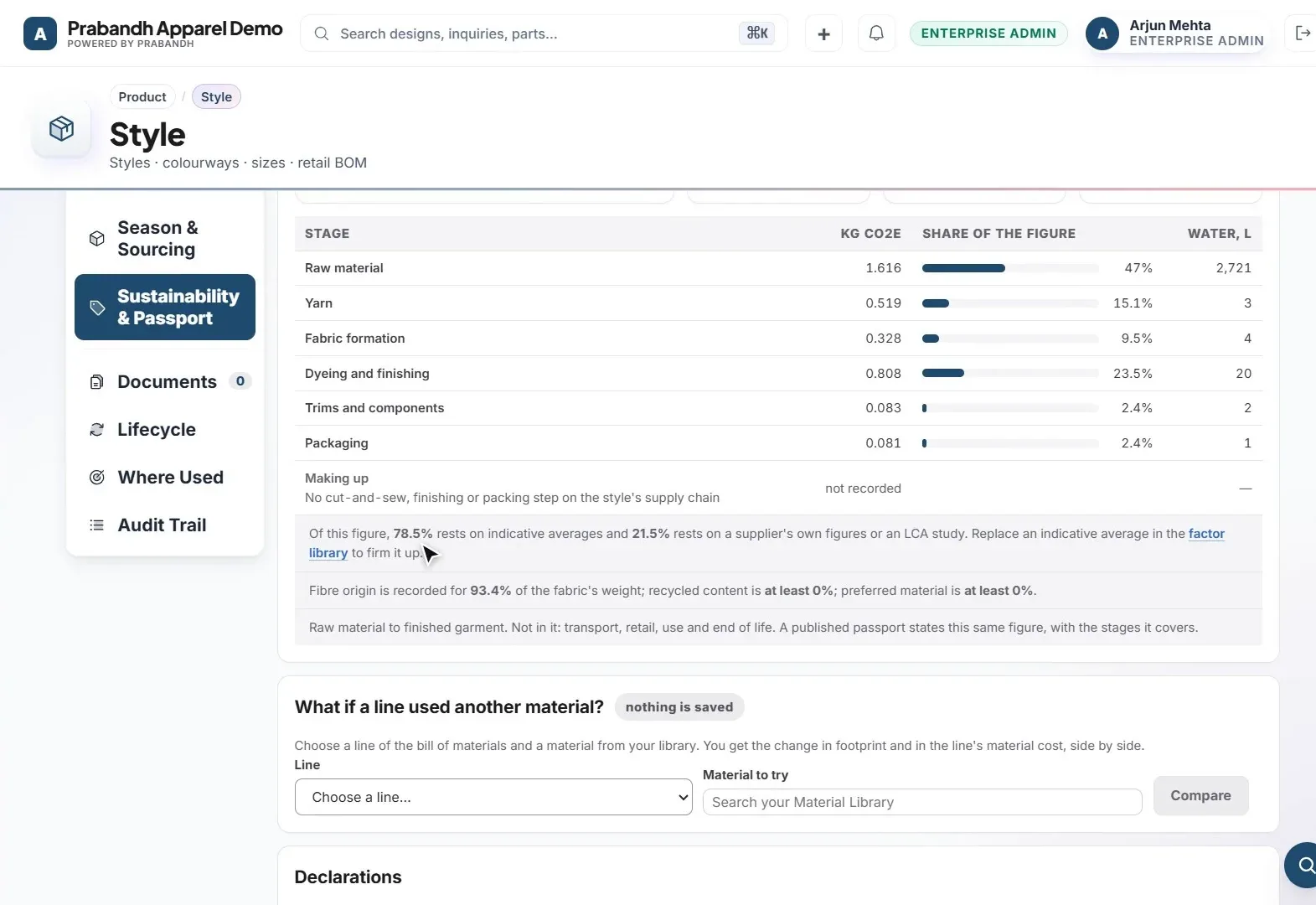
Footprint and water by stage for one garment, from the bill of materials, with a what-if that shows the change beside the cost.
The footprint of the season's planned quantities, the styles that carry most of it, and a carbon cost if you set an internal price.
The buy by supplier risk, audit findings with owners and dates, and a sustainability criterion in the quotation scorecard.
Restricted-substance limits you accept, checked against your own test results at pre-production approval.
A claims register with evidence, a wording check, plastic packaging placed on the market and a public product passport.
What is specific to sustainability.
Fibre, yarn, fabric, dyeing and finishing, trims, packaging and making up. A stage with nothing on file reads not recorded.
Each factor is indicative, public, supplier or measured, and a changed value is a new version.
High, medium, low or unknown, with the reasons written down; a supplier with nothing on file is never shown as low.
Limits by market with their source; a missing test result is never counted as a pass.
Each claim backed, lapsing or not backed by the dates of its evidence, with a check of watched words.
Weight and recycled content by plastic category, against targets you enter.
A public page behind a QR code, published only when its evidence checklist is complete.
A sustainability lens beside the sourcing, design and merchandising figures.
Watch
Eight short films on a demonstration apparel company with illustrative figures: the overview, the material choice, suppliers, substance limits, claims and packaging.
Material, maker, quantity and claim: the four decisions. 2:10

The rules reaching fashion brands and their dates, as filmed in November 2026. 2:26
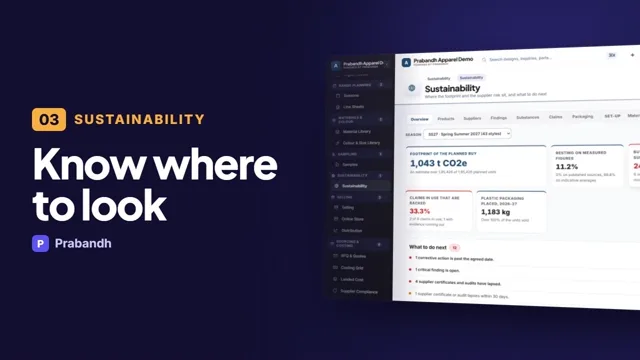
The figures, what to do next and the charts. 1:39
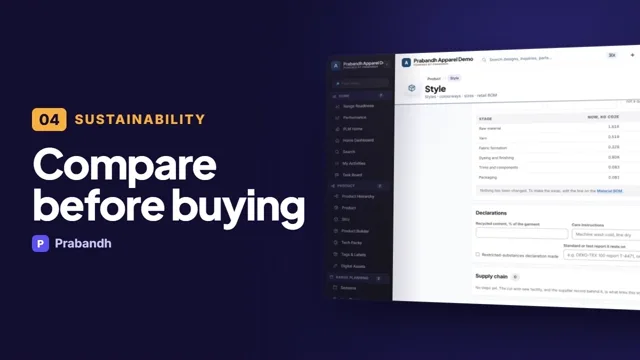
Footprint by stage and a material what-if. 1:44
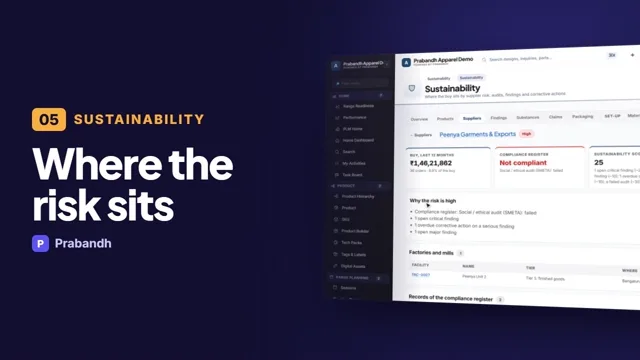
The footprint of the buy, supplier risk and findings. 1:51
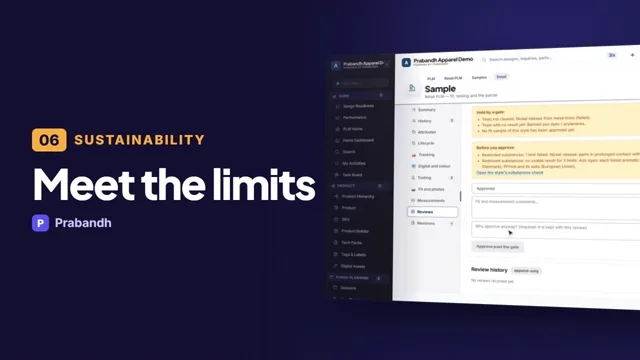
Limits by market checked against test results. 1:40
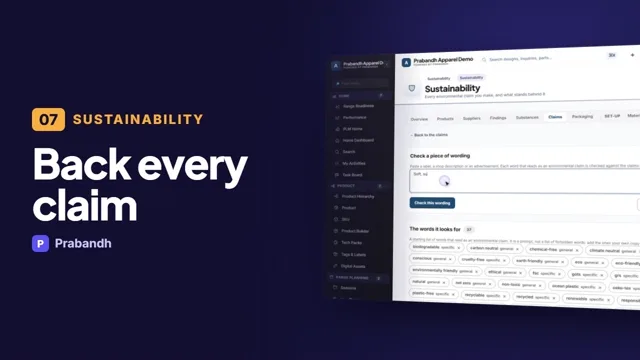
The claims register, wording check and packaging. 1:56

What the product does today and how to start. 1:51
Playing a film loads it from YouTube. Open the whole playlist on YouTube.
The footprint covers textile fibres from raw material to the finished garment: not leather, rubber or foam, and not transport, retail, use or end of life. No eco-score, no filing with any authority or registry, no licensed emission-factor database, and not the European digital-product-passport registry format. The checks compare your records with limits you accept: they are not a certificate or legal advice.
Footprint, supplier risk, substance limits, claims and packaging, beside the decisions that set them.
Learn moreA garment's fibre, mill and certificates, shown to anyone who scans the label.
Learn moreFrom the range plan to the landed cost, on one record per style.
Learn moreFrom enquiry to paid bill, with the supplier compared and the receipt matched.
Learn moreEvery obligation, certificate and audit in one calendar, with the evidence attached.
Learn moreAlso see: Sustainability module · Product passport and supplier compliance · Prabandh for Apparel · PLM for apparel
It keeps the environmental facts of what a brand makes and buys: the footprint of each style, the factories and their audits, the substance limits of each market, the evidence behind each claim and the packaging sold. Prabandh keeps them beside the bill of materials, the purchase orders and the invoices.
From the bill of materials: the weight of each fabric, its fibre mix and the factor for each fibre, then the process steps of the material and the style. It is an estimate and says so, with the stages it covers and the share that rests on indicative, published or measured figures.
A starting set of indicative averages, so a first figure can be read. You replace them with public, supplier or measured figures and record the source. No licensed database is included.
No software can promise that. Prabandh records limits, evidence, claims and packaging and shows what is missing or out of date. Which rules apply to you, and what they require, is for your own advisers to confirm.
The Beauty and Cosmetics edition carries the overview, claims register and packaging register. The garment footprint, supplier and substance screens are for apparel.
Send an inquiry or request a demo. A specialist replies within one working day. Pricing is given by inquiry because it depends on users, modules and the data you bring across.